How to Cook Broccolini Perfectly Every Time
Learning how to cook broccolini opens up a world of healthy vegetable side dishes for your dinner table. This green vegetable is tender, flavorful, and simple to prepare once you know the basics. Whether you are new to cooking or looking to expand your skills, this guide walks you through every step of the process.
Broccolini is a hybrid vegetable that combines broccoli with Chinese kale. The Sakata Seed Company developed this nutritious green in 1993, and it has grown popular across American kitchens. The best way to cook broccolini brings out its natural sweetness and creates a satisfying easy side dish for any meal.
This beginner-friendly guide teaches you cooking tips for beginners to help you succeed. You will learn three main cooking methods that work well for different tastes and textures. Each technique is straightforward and uses tools you likely have at home.
Key Takeaways
- Broccolini is a hybrid vegetable created by the Sakata Seed Company in 1993
- You can cook broccolini through sautéing, roasting, or steaming methods
- Proper preparation includes trimming stems and drying the vegetables
- Season your broccolini with simple ingredients like garlic and olive oil
- Cooking times vary from 3 to 15 minutes depending on your chosen method
- Pair cooked broccolini with citrus, nuts, or other complementary flavors
- This vegetable works as a quick side dish for weeknight dinners
Understanding the Basics of Broccolini
Before you learn how to cook broccolini, you need to understand what makes this vegetable special. Broccolini belongs to the brassica family, which includes cabbage and Brussels sprouts. Unlike regular broccoli, broccolini has a milder, sweeter taste that works well in many healthy vegetable side dishes. This makes it perfect for people new to cooking greens or those who want to expand their healthy eating options.
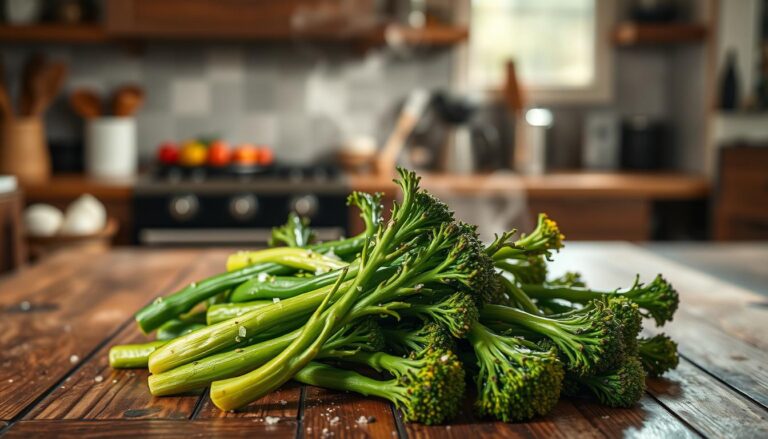
Learning about vegetable preparation starts with knowing what to look for at the store. Fresh broccolini should have vibrant green stems and florets with no yellowing or soft spots. The stalks should feel firm when you gently squeeze them. These signs tell you the vegetable is fresh and ready to cook. Nutritious vegetables like broccolini work best when picked at peak freshness.
Understanding how broccolini grows helps you cook it better. The plant has long, thin stalks with small flower clusters at the top. This structure means it cooks faster and more evenly than traditional broccoli. You’ll get tender florets and perfectly cooked stems when you understand these differences.
Key Features of Broccolini
- Tender, slender stems that cook quickly
- Mild, slightly sweet flavor profile
- Small florets perfect for even cooking
- Rich in vitamins C and K
- Low in calories and high in fiber
Nutritious vegetables deserve your attention when planning meals. Broccolini packs vitamins and minerals that support your body’s health. Adding it to your diet strengthens your nutritional goals while keeping meals interesting and delicious.
How to Cook Broccolini for Optimal Flavor
Learning how to cook broccolini opens up a world of delicious possibilities for your kitchen. The best way to cook broccolini depends on your desired texture and flavor profile. Each cooking technique brings out different qualities in this tender green vegetable, allowing you to create varied broccolini recipes that suit any meal.
Understanding the impact of heat is essential for mastering cooking techniques with broccolini. Different temperatures and methods transform the vegetable’s natural sweetness and delicate structure in unique ways. Your choice of preparation method shapes the final dish’s taste and texture.
Three primary approaches stand out for creating healthy vegetable side dishes:
- Sautéed broccolini develops a tender interior with slightly crispy edges when cooked in a hot skillet with oil and garlic
- Roasted broccolini creates caramelized, golden florets with concentrated flavors through high-heat oven cooking
- Steamed broccolini preserves a bright green color and gentle, mild taste ideal for lighter preparations
Each method requires different timing and attention levels. Sautéed versions typically take 5-7 minutes, while roasting demands 12-15 minutes at high temperatures. Steaming usually needs just 4-5 minutes for perfect tenderness.
Experimenting with these approaches helps you discover your preferred broccolini recipes. Start with one technique, master it, then explore others to build your cooking confidence and expand your vegetable repertoire.
Essential Tools for Your Kitchen
When you start learning how to cook broccolini, having the right equipment makes all the difference. Quality kitchen essentials transform cooking from frustrating to enjoyable. You don’t need many tools, but the ones you choose should work well and last for years. Building a strong foundation with proper gear is one of the best cooking tips for beginners.
The right equipment helps you develop your culinary skills faster. You’ll gain confidence when your tools respond the way you expect. Quality items also make cleanup easier and keep your kitchen running smoothly.
Choosing the Right Skillet
Your skillet is your primary weapon for cooking broccolini. A heavy-bottomed pan distributes heat evenly across the entire surface. This prevents hot spots that burn some pieces while leaving others undercooked.
Consider these skillet options:
- Stainless steel skillets offer durability and easy cleanup
- Cast iron pans provide excellent heat retention and distribution
- Nonstick surfaces reduce the need for excess oil
Choose a 10 to 12-inch skillet. This size gives you room to spread broccolini without crowding. Crowded pans create steam instead of the golden-brown sear you want.
Selecting Quality Tongs
Tongs let you handle delicate stalks with precision. Look for tongs made from stainless steel with a comfortable grip. The tips should close firmly without too much force.
Quality kitchen essentials like proper tongs help you:
- Flip broccolini pieces evenly
- Move vegetables without breaking them
- Work safely away from hot surfaces
Spring-loaded tongs work best for most home cooks. Test them in the store to find ones that feel balanced in your hand. Good tongs become extensions of your arms in the kitchen.
Preparing Your Vegetables for the Pan
Getting your broccolini ready is the foundation of success. Proper vegetable preparation makes the difference between a dish that tastes amazing and one that falls flat. Before you apply any heat, you need to handle your broccolini with care. This step takes just a few minutes but rewards you with perfect results every single time. Think of prep work as an investment in your final meal.
Many home cooks skip or rush this stage. Cooking tips for beginners always emphasize that taking time to prepare your ingredients properly sets the tone for everything that comes next. Your nutritious vegetables deserve the attention to detail that will bring out their best qualities.
Trimming the Stems
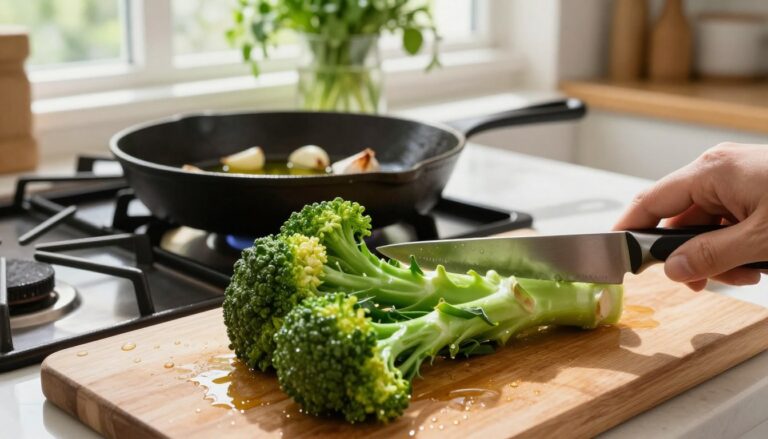
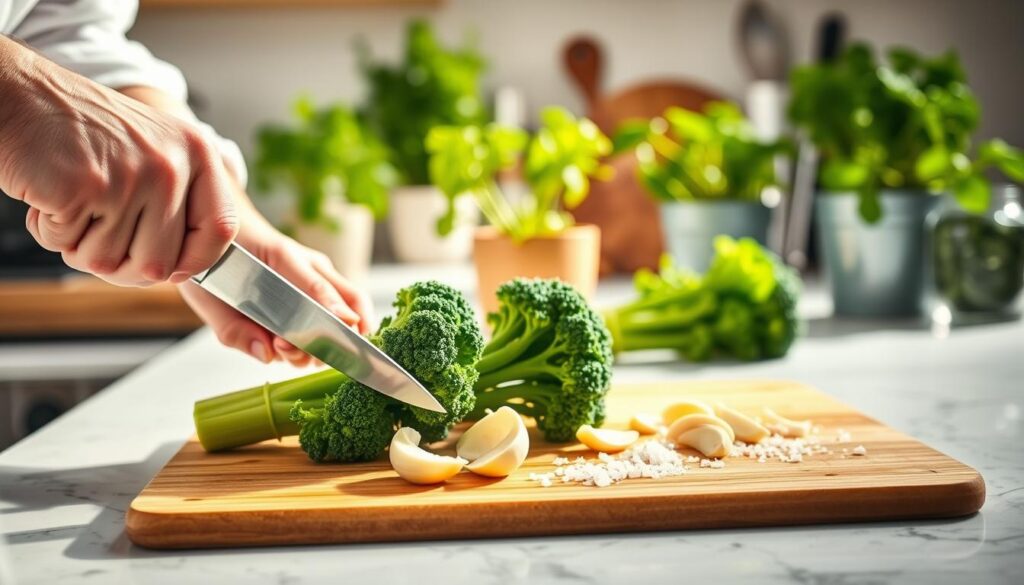
The first task is removing the woody parts at the bottom of each stem. These tough sections won’t soften much during cooking, so cutting them away is essential. Hold each stalk firmly and locate where the green color starts to fade into pale or white areas. Use a sharp knife to slice off these woody ends, removing about one to two inches from the bottom.
You can also peel the outer layer of thicker stems with a vegetable peeler. This technique lets you use more of the stalk while removing the tough exterior. Once trimmed, your broccolini pieces should look uniform in size, which helps them cook evenly. These culinary skills will improve your results with any how to cook broccolini method you choose.
Washing and Drying
Rinse your trimmed broccolini under cool running water. Use your fingers to gently rub the florets, removing any dirt or debris trapped between the tiny flower heads. Pay special attention to the crevices where soil likes to hide.
Drying is just as important as washing. Excess moisture prevents proper browning and creates steam instead of a nice sear. Pat your broccolini dry with clean paper towels or a kitchen cloth. For the best results, let the pieces air-dry for a few minutes on a clean cutting board. This vegetable preparation step ensures your pan will be hot enough to create that beautiful golden color you want.
| Preparation Step | Time Required | Key Benefit |
|---|---|---|
| Trimming woody ends | 2-3 minutes | Removes tough, inedible portions for better texture |
| Peeling thick stems | 2-4 minutes | Maximizes usable vegetable while keeping tender inside |
| Washing florets and stems | 1-2 minutes | Eliminates dirt and debris from growing in soil |
| Thorough drying | 3-5 minutes | Enables proper browning and prevents excess moisture in cooking |
These simple steps transform how you cook broccolini. When your vegetables are clean, dry, and properly trimmed, they cook evenly and taste wonderful. You are now ready to move forward with confidence.
Mastering the Sautéing Technique
Sautéed broccolini stands out as the best way to cook broccolini when you want fast, flavorful results. This cooking method uses high heat and minimal oil to create a tender-crisp texture that makes your dish shine. The quick sear on the florets locks in nutrients while keeping the stems perfectly cooked through.
Learning how to cook broccolini using sautéing techniques takes just minutes. The high temperature creates a beautiful caramelization on your florets while the short cooking time preserves the vegetable’s natural crunch.
The Sautéing Process
Follow these steps to perfect your sautéed broccolini:
- Heat your skillet over medium-high heat for about 2 minutes
- Add 2 tablespoons of olive oil and let it warm until shimmering
- Place your prepared broccolini in the pan with the florets facing down
- Let them cook undisturbed for 3-4 minutes to develop a golden color
- Toss the vegetables and cook for another 2-3 minutes
- Season with salt, pepper, and minced garlic during the final minute
Sautéed broccolini comes alive when you add aromatics. Garlic, red pepper flakes, and a squeeze of fresh lemon juice transform simple ingredients into restaurant-quality side dishes.
Timing and Temperature Control
The key to perfect sautéed broccolini lies in consistent heat. Keep your burner at medium-high to maintain an active sizzle without burning. Don’t crowd your pan—cook in a single layer for even browning.
Discover countless broccolini recipes that build on this fundamental cooking technique. Once you master sautéing, you can adapt these methods to create different flavor combinations for any meal.
Roasting Methods for Crispy Edges
Roasted broccolini delivers a depth of flavor that many home cooks love. The roasting method creates caramelized edges and brings out natural sweetness in the vegetable. When you roast broccolini at 400°F, you unlock a nutty taste that makes this simple vegetable taste restaurant-quality. This hands-off cooking approach works perfectly for busy weeknights when you want impressive results without constant attention.
Understanding the roasting process helps you master the best way to cook broccolini at home. The dry heat of your oven creates the perfect environment for achieving that signature char everyone craves. Many popular broccolini recipes rely on this method because it requires minimal effort while delivering consistent, delicious outcomes.
Seasoning Your Florets
Proper seasoning transforms your roasted broccolini from basic to extraordinary. Start by coating your florets with these essential ingredients:
- Extra virgin olive oil
- Sea salt
- Fresh black pepper
- Optional garlic powder or red pepper flakes
Toss your broccolini pieces thoroughly to ensure every piece gets coated evenly. The olive oil acts as a conductor for heat and helps create those crispy, golden edges you’re after.
Achieving the Perfect Char
Getting that perfect char requires attention to detail and proper timing. Spread your seasoned florets in a single layer on your baking sheet without crowding. Roast for 12 to 15 minutes, shaking the pan halfway through cooking. Your broccolini is ready when the edges turn deep brown and crispy.
Learning how to cook broccolini with proper charring takes practice. Watch for florets that develop dark, almost blackened tips—this indicates caramelization and peak flavor development. Remove your pan from the oven when the stems become tender and the florets achieve a beautiful golden-brown appearance.
Steaming for a Tender Texture
Steamed broccolini represents one of the gentlest cooking techniques you can use in your kitchen. This method locks in nutrients while keeping your vegetables tender and vibrant green. If you want to learn how to cook broccolini with minimal effort, steaming is your answer. The process requires just a few minutes and basic equipment you likely already own.
Using a steamer basket over boiling water ensures even cooking throughout the stalks. Your broccolini stays moist and delicate without becoming waterlogged. This approach is the best way to cook broccolini when you prefer soft texture over crispy edges. The natural sweetness of the vegetable shines through without any burnt spots.
Steamed broccolini makes an excellent base for many broccolini recipes. The tender florets absorb flavors beautifully when you add sauces or seasonings afterward. This cooking technique takes about five to seven minutes, making it perfect for busy weeknight dinners.
Steps for Perfect Steaming
- Fill a pot with one inch of water and place a steamer basket inside
- Bring water to a rolling boil before adding your broccolini
- Arrange florets in a single layer with stems facing down
- Cover the pot with a lid to trap steam
- Steam for five to seven minutes until tender
- Transfer to a serving plate immediately
Steaming requires minimal cleanup and preparation compared to other cooking techniques. You’ll spend less time washing dishes and more time enjoying your meal. This practical method fits easily into your weekly meal rotation.
Serving Suggestions and Flavor Pairings
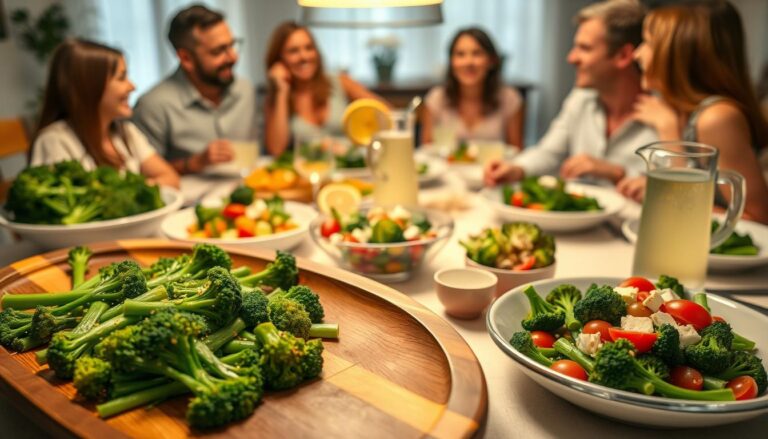
Once you master how to cook broccolini, you can transform your dish into something truly special. The real magic happens when you pair your freshly cooked broccolini with complementary flavors and textures. Simple additions turn easy side dishes into memorable parts of your meal. Your guests will appreciate the thought and care you put into every bite.
Timing matters when serving your broccolini. Serve it immediately after cooking to keep the florets crispy and full of flavor. This ensures the best eating experience for everyone at your table.
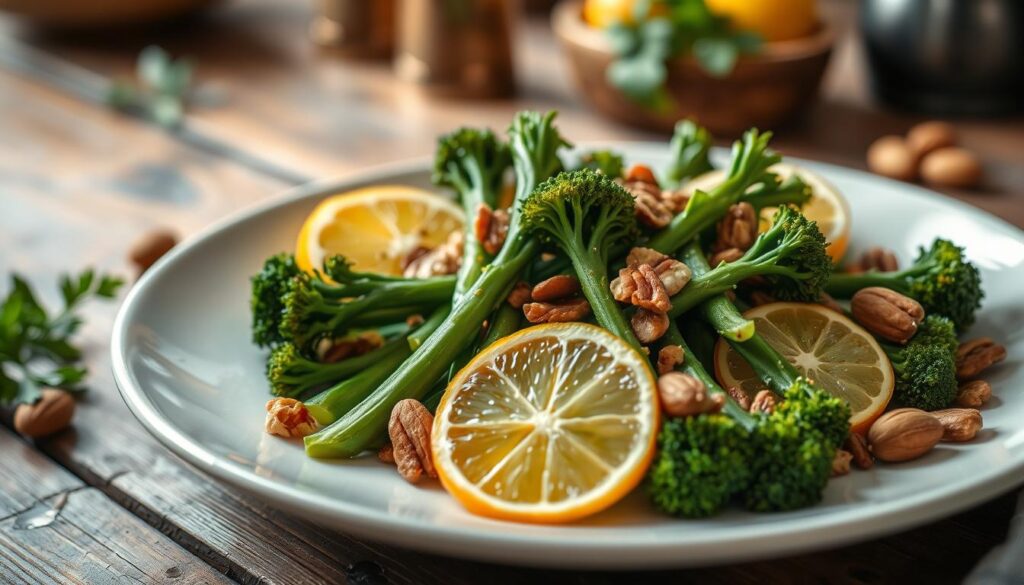
Adding Citrus and Zest
Bright citrus flavors bring new life to your broccolini recipes. A squeeze of fresh lemon juice cuts through the vegetable’s natural richness and adds a refreshing kick. Orange zest works beautifully too, offering a sweet and tangy contrast.
These healthy vegetable side dishes benefit from citrus in several ways:
- Lemon juice brightens the overall flavor profile
- Lime zest adds a subtle tropical note
- Orange segments provide both juice and texture
- Grapefruit offers a bold, sophisticated taste
Incorporating Toasted Nuts
Toasted nuts add wonderful crunch and richness to your healthy eating plan. Almonds, pine nuts, and walnuts all pair beautifully with broccolini. Toast them lightly in a dry pan for 2-3 minutes to unlock their full flavor.
| Nut Type | Flavor Profile | Best Use |
|---|---|---|
| Almonds | Mild, slightly sweet | Works with any broccolini preparation |
| Pine Nuts | Rich, buttery | Pairs well with garlic and lemon |
| Walnuts | Earthy, bold | Complements Asian-inspired seasonings |
| Pecans | Sweet, warm | Great with honey or maple glazes |
Combining citrus zest with toasted nuts creates restaurant-quality results at home. These simple additions elevate your easy side dishes without requiring extra cooking time or complicated techniques.
Conclusion
You have learned the skills needed to master how to cook broccolini in your kitchen. This guide walked you through every step, from choosing the right kitchen essentials to understanding different cooking methods. Whether you roast, sauté, or steam your broccolini, you now have the knowledge to prepare it perfectly every time.
Cooking broccolini builds your culinary skills and opens doors to creating delicious healthy vegetable side dishes at home. The techniques you learned apply to many other vegetables as well. With practice, you will feel confident adding these nutritious vegetables to your weekly meals. Your family will enjoy the crispy edges, tender textures, and rich flavors you can now produce.
Easy side dishes do not need to be boring or time-consuming. Broccolini fits perfectly into your routine for healthy eating and meal planning. Use the flavor pairings with citrus, nuts, and spices to keep your dishes exciting. The kitchen essentials you selected will serve you well for years to come as you continue to grow as a home cook.
Start cooking broccolini this week and watch your confidence grow. You have all the tools, techniques, and knowledge to succeed. Enjoy the journey of becoming better at preparing fresh, wholesome food for yourself and those you care about.
FAQ
What is broccolini and how does it differ from regular broccoli?
Broccolini is a hybrid vegetable created by crossing broccoli with Chinese kale, first developed in 1993 by the Sakata Seed Company. Unlike standard broccoli, broccolini offers a milder, sweeter flavor profile and has longer, more delicate stems that cook more evenly. As a member of the brassica family, this nutritious vegetable provides a significant boost of vitamins while being a versatile addition to your healthy eating plan.
How do I select fresh broccolini at the grocery store?
When choosing broccolini, look for firm stalks that are vibrant green and free from yellowing or discoloration. Fresh broccolini should have crisp florets without any wilting or browning. Proper vegetable selection is the foundation of creating flavorful broccolini recipes, so inspect the entire bunch before purchasing to ensure quality produce for your home kitchen.
What is the best way to cook broccolini?
The best way to cook broccolini depends on your personal preferences and desired outcome. You can master sautéed broccolini for quick, flavorful results with a tender-crisp texture, roasted broccolini for deeper, nuttier flavor with crispy edges, or steamed broccolini for a softer texture that retains nutrients. Each cooking technique offers unique benefits and allows you to create diverse healthy vegetable side dishes suited to any occasion.
How should I prepare broccolini before cooking?
Proper vegetable preparation begins with washing and drying the stalks thoroughly, as excess moisture can prevent proper browning during cooking. Next, trim the woody ends by removing approximately one to two inches from the bottom of each stem, leaving only the most tender portions. These essential cooking tips for beginners ensure that your vegetable maintains integrity while preparing it for heat-based methods, resulting in perfect texture and flavor every time.
What kitchen tools do I need to cook broccolini?
Having the right equipment is vital when learning how to cook broccolini. Invest in a heavy-bottomed stainless steel or cast-iron skillet for even heat distribution, and select quality tongs that allow you to handle delicate stalks with precision. These basic kitchen essentials will not only improve your results with this vegetable but also serve you well across a wide range of other cooking tasks in your home kitchen.
How do I sauté broccolini to achieve the best results?
Sautéed broccolini uses high heat and a small amount of oil to create a tender-crisp texture that is the hallmark of popular broccolini recipes. Heat your skillet until it’s very hot, add oil, then place the broccolini cut-side down to achieve a beautiful sear on the florets. This method typically takes just a few minutes and allows for quick infusion of aromatics like garlic and red pepper flakes, transforming simple ingredients into restaurant-quality side dishes.
What temperature should I use when roasting broccolini?
Set your oven to 400°F to create the ideal environment for roasting broccolini and achieving the perfect char on the florets. This temperature allows you to develop crispy edges while keeping the stems properly cooked. Season your florets with high-quality olive oil, sea salt, and black pepper before roasting, as these simple additions enhance the natural taste of the vegetable and deliver impressive, consistent results with minimal effort.
How long does it take to steam broccolini?
Steamed broccolini typically requires 5 to 7 minutes of cooking time, depending on the thickness of your stalks and your desired tenderness level. Use a steamer basket over boiling water to ensure that the stalks cook evenly without becoming waterlogged or mushy. This gentle cooking technique is efficient, requires minimal cleanup, and preserves the nutrients and natural sweetness of the vegetable, making it a practical addition to your weekly meal rotation.
What are some flavor pairings that complement broccolini?
Once you master how to cook broccolini, enhance your broccolini recipes by experimenting with various flavor pairings. Fresh citrus juice and zest, such as lemon or orange, provides bright acidity that cuts through the vegetable’s richness. Toasted nuts like almonds or pine nuts add satisfying crunch. Garlic, red pepper flakes, high-quality olive oil, and sea salt are also excellent additions that transform easy side dishes into sophisticated components of your healthy eating plan.
How do I prevent broccolini from becoming soggy or overcooked?
Prevent soggy broccolini by ensuring your stalks are thoroughly dried before cooking, as excess moisture inhibits proper browning. Trim the woody ends to ensure even cooking throughout the entire vegetable. Use appropriate cooking techniques for your preferred result—sautéing and roasting provide crisp textures, while steaming should be monitored carefully to avoid overcooking. Serving your broccolini immediately after cooking ensures the best texture and flavor for optimal enjoyment.
Can I prepare broccolini in advance?
Yes, you can prepare broccolini ahead of time by trimming and washing your stalks several hours before cooking. Store the prepared vegetable in an airtight container in your refrigerator to maintain freshness. However, for the best results with your broccolini recipes, cook the vegetable close to serving time rather than preparing it completely in advance, as this preserves the texture and flavor profile that makes healthy vegetable side dishes so appealing.
What health benefits does broccolini provide?
As a member of the brassica family, broccolini offers a significant boost of vitamins and nutrients that support your overall wellness goals. This nutritious vegetable is rich in vitamin C, vitamin K, and dietary fiber, making it an excellent choice for healthy eating. Incorporating broccolini recipes into your regular meal rotation provides essential nutrients while delivering delicious, easy side dishes that contribute to your nutritional objectives without sacrificing flavor.
How do I store leftover cooked broccolini?
Store leftover cooked broccolini in an airtight container in your refrigerator for up to three to four days. To maintain the best quality, allow the vegetable to cool completely before storing. You can reheat broccolini gently in a skillet over medium heat or in the microwave, though it’s best enjoyed fresh. Proper storage ensures that your healthy vegetable side dishes remain safe and maintain acceptable quality for future meals in your home kitchen.
Is broccolini suitable for different cooking skill levels?
Absolutely. Learning how to cook broccolini is a fundamental skill for anyone, regardless of experience level. This beginner-friendly guide provides essential cooking tips that allow you to navigate the process with confidence and ease. Whether you’re developing culinary skills or you’re already experienced, broccolini’s versatility makes it an ideal vegetable for practicing various cooking techniques and creating diverse broccolini recipes that suit your expertise level.