Lemon Broccolini Recipe: A Fresh and Flavorful Side Dish Idea
You can turn simple ingredients into something special with the right techniques. Lemon broccolini brings bright flavors to your dinner table in just minutes. This vibrant side dish works well with chicken, fish, or pasta dishes.
Broccolini is a unique hybrid vegetable that sits between broccoli and Chinese kale. It has tender stems and small florets that cook quickly. The natural sweetness comes through when you prepare it with care and quality ingredients.
Learning to make lemon broccolini gives you a restaurant-quality side dish for your home kitchen. You’ll discover how to bring out the best flavors in this seasonal produce. Your weekly meal rotation will benefit from having this dish in your cooking skills.
This guide walks you through every step of the cooking process. You’ll learn what to look for when shopping at the market. You’ll also find out the best ways to prepare and cook your vegetables for perfect results each time.
Understanding the Appeal of Broccolini
Broccolini stands out as a unique vegetable that brings something special to your dinner table. You might notice it looks different from regular broccoli at first glance. This green veggie offers a milder taste and tender texture that many people prefer. Let’s explore what makes broccolini such a popular choice for home cooks across the United States.
Broccolini is a hybrid vegetable created by crossing traditional broccoli with Chinese kale, also known as gai lan. This special combination gives you the best of both worlds. You get long, slender stems that are tender and easy to eat. The delicate florets remain soft when cooked, making the entire plant edible.
Why You’ll Love Broccolini’s Taste and Texture
The flavor profile of broccolini is much milder than standard broccoli varieties. You won’t experience that strong, bitter taste that sometimes turns people away from regular broccoli. Instead, broccolini offers a subtle, slightly sweet flavor that appeals to many palates. The tender stems cook quickly and stay juicy, never becoming woody or tough.
Nutritional Benefits for Your Diet
Broccolini packs serious nutritional power into every bite. You’ll get plenty of Vitamin C and Vitamin A in each serving. These essential vitamins support your immune system and eye health. Broccolini also contains fiber and minerals that keep your body running smoothly. It’s a nutritious addition to any balanced diet.
- Rich in Vitamin C for immune support
- Contains Vitamin A for healthy vision
- Packed with dietary fiber
- Low in calories
- Contains calcium and iron
Essential Ingredients for Your Dish
Building a delicious lemon broccolini dish starts with gathering the right ingredients. Quality matters when you’re working with simple recipes. You want items that work together to create bright, fresh flavors. Let’s break down what you need to buy before heading to your kitchen.
Fresh Produce
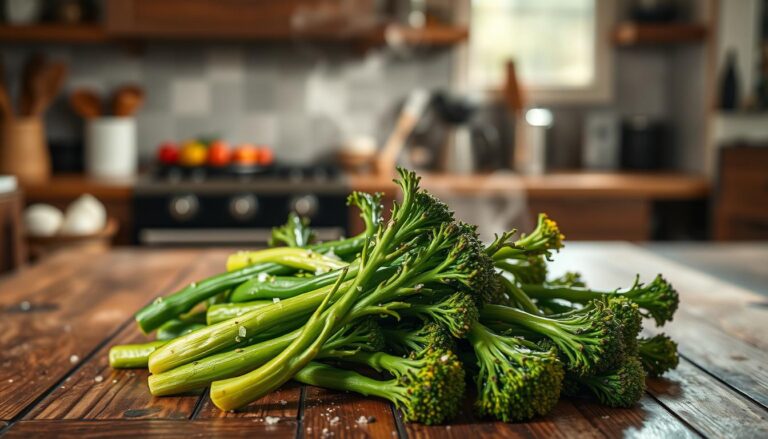
Your broccolini is the star of this side dish. Visit your local farmers market or grocery store and look for firm, vibrant green bunches. Avoid any that show yellowing leaves or wilted stems. Fresh broccolini should feel crisp when you hold it.
Beyond broccolini, you’ll want to grab a few other fresh items:
- Fresh lemons (at least 2-3 for juice and zest)
- Garlic cloves (about 4-5 cloves)
- Fresh herbs like parsley or thyme
Pantry Staples
Your pantry should stock the basics that bring everything together. High-quality extra virgin olive oil creates a silky coating and adds rich flavor. Kosher salt and freshly cracked black pepper enhance the natural taste of your vegetables without overpowering them.
| Ingredient | Amount | Purpose |
|---|---|---|
| Extra Virgin Olive Oil | 3-4 tablespoons | Coating and cooking medium |
| Kosher Salt | 1 teaspoon | Seasoning enhancement |
| Black Pepper | 1/2 teaspoon | Flavor depth |
Having these ingredients ready before you start cooking creates a smooth kitchen experience. You won’t waste time searching for items mid-preparation.
How to Make Lemon Broccolini
Creating a delicious lemon broccolini dish requires understanding the balance between heat and acidity. The bright citrus flavor cuts through the earthy notes of the vegetable, creating a side dish that enhances grilled salmon, roasted chicken, or pasta dishes. The timing of when you add the lemon juice makes all the difference in achieving the perfect taste.
Learning how to make broccolini starts with proper preparation and cooking technique. You’ll discover that the secret lies in managing both temperature and ingredient order. This approach prevents your vegetables from becoming overly acidic while maximizing flavor development.
The Cooking Process
Start by heating olive oil in a large skillet over medium-high heat. Add minced garlic and let it become fragrant for about 30 seconds. Place your prepared broccolini bunches into the pan, arranging them in a single layer when possible.
Cook the broccolini for 4-5 minutes, stirring occasionally. The florets should begin to develop light golden spots. Add a splash of water to the pan to help steam the vegetables while they finish cooking.
Remove the pan from heat before adding your lemon juice and zest. This final step preserves the fresh citrus flavor without cooking it away. Toss everything together gently, and your lemon broccolini is ready to serve.
| Step | Action | Time |
|---|---|---|
| 1 | Heat olive oil and cook garlic | 1 minute |
| 2 | Add broccolini to the skillet | 30 seconds |
| 3 | Cook broccolini with occasional stirring | 4-5 minutes |
| 4 | Add water for steaming | 2-3 minutes |
| 5 | Remove from heat and add lemon juice and zest | 1 minute |
- Use fresh lemon juice for the best flavor
- Add lemon components after cooking to preserve brightness
- Stir gently to coat all florets evenly
- Serve immediately while still warm
Preparing Your Vegetables for Cooking
Getting your broccolini ready for cooking is the first step to creating a delicious side dish. The right preparation ensures your vegetables cook evenly and develop a great texture. This process takes just a few minutes but makes a real difference in your final result.
Proper prep work removes any dirt or grit that may be hiding in the florets. It also gets rid of tough, woody parts that you do not want to eat. When you take time to prepare your broccolini correctly, you set yourself up for success in the kitchen.
Trimming the Stems
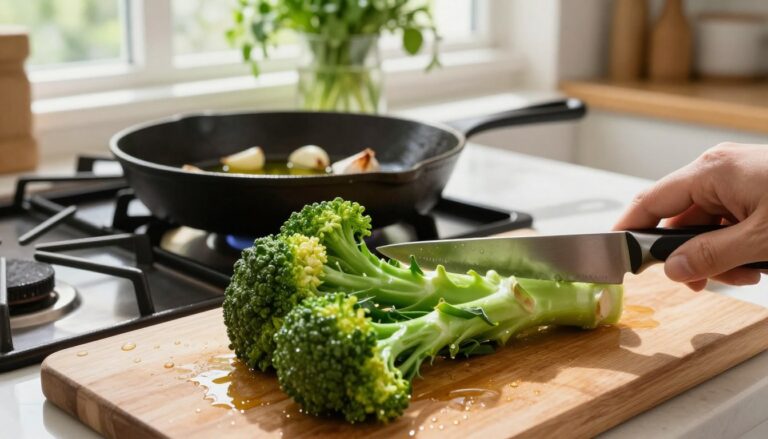
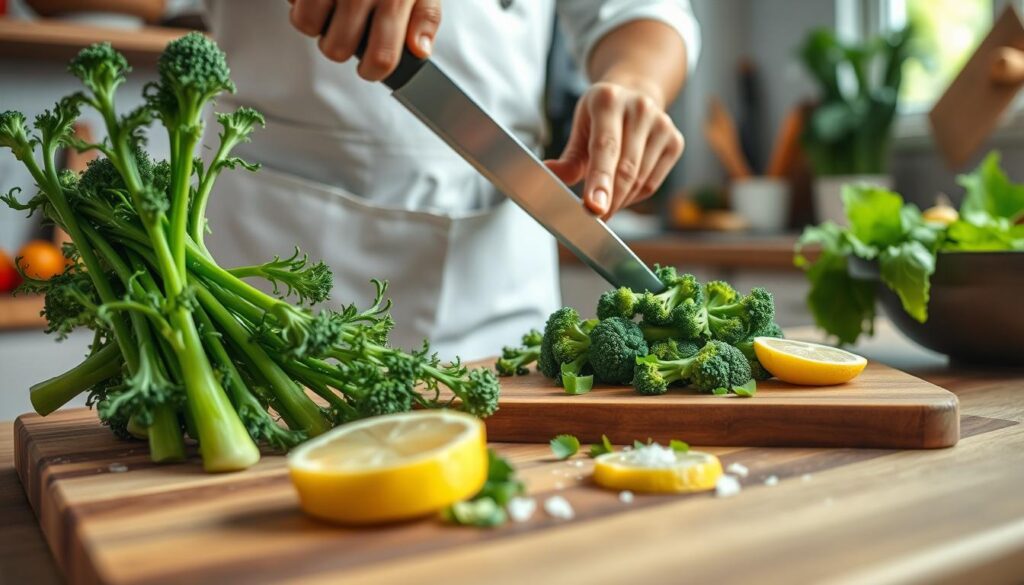
The stems of broccolini need attention before cooking. You should remove the woody ends from the bottom of each bunch. These tough parts do not taste good and do not soften during cooking.
Use a sharp knife to cut away about one-half to one inch from the bottom of each stem. Look for where the color changes or where the stem feels hard to the touch. Cut at an angle for a neat appearance.
- Hold the broccolini firmly on a cutting board
- Use a clean, sharp knife for clean cuts
- Remove only the tough, woody portions
- Keep the tender green parts intact
Washing Techniques
Clean water removes dirt and debris from your vegetables. Run your broccolini bunches under cold, running water. Gently rub the florets with your fingers to release any trapped particles.
Pay special attention to the areas between the florets where soil can hide. After washing, pat your vegetables dry with paper towels. Dry broccolini cooks better and gets crispier edges than wet vegetables.
| Preparation Step | What to Do | Why It Matters |
|---|---|---|
| Trimming stems | Cut off woody ends from the bottom | Removes tough, inedible parts |
| Washing florets | Rinse under cold running water | Removes dirt and debris |
| Drying vegetables | Pat dry with paper towels | Allows proper searing and crisping |
Fresh, clean broccolini that is completely dry will sear properly in your pan. Moisture can cause steaming instead of the browning you want. Taking these extra minutes to dry your vegetables pays off with better flavor and texture.
How to Cook Broccolini on the Stovetop
The stovetop method offers one of the quickest ways to prepare this nutritious green vegetable. When you learn how to cook broccolini on the stovetop, you get a tender-crisp texture while keeping the vibrant green color intact. This cooking technique works perfectly for busy weeknights when you need a side dish ready in less than ten minutes.
Start by heating a wide skillet over medium heat. Add about one-quarter cup of water to the pan, then place your prepared broccolini bunches into the skillet. The water creates steam that softens the vegetable while the pan’s heat begins cooking the stems and florets.
The Two-Stage Cooking Process
This stovetop method uses two distinct cooking stages. First, cover your skillet and let the broccolini steam for about three to four minutes. The water will start to evaporate while the stems become tender. Listen for the sizzling sound that signals the water is nearly gone.
Once most of the water has evaporated, remove the cover and increase your heat to medium-high. Add a splash of olive oil and your minced garlic to the pan. Let the broccolini sauté for another one to two minutes. This high-heat finish creates light browning on the florets and gives you that restaurant-quality appearance.
| Cooking Stage | Temperature | Time | Key Action |
|---|---|---|---|
| Steaming | Medium Heat | 3-4 Minutes | Cover skillet with lid |
| Sautéing | Medium-High Heat | 1-2 Minutes | Add oil and garlic |
| Finishing | Medium-High Heat | 30 Seconds | Toss with lemon juice |
Essential Tips for Success
- Use a wide skillet to ensure even cooking across all bunches
- Don’t overcrowd the pan, as this traps steam and creates mushy texture
- Keep your water amount minimal to prevent soggy broccolini
- Watch the pan closely during the sauté stage to avoid burning
- Season with salt and pepper after cooking, not before
The beauty of this stovetop approach lies in its simplicity and speed. You maintain control over the cooking process while achieving that perfect balance between tender stems and crispy florets. Finish your dish with fresh lemon juice right before serving for the best flavor.
Tips for Perfect Oven Roasted Broccolini
Learning how to cook broccolini in your oven opens up a world of deeper, caramelized flavors that stovetop methods simply cannot match. Oven roasted broccolini delivers crispy, golden-brown edges while keeping the stems tender and juicy. This cooking method transforms your vegetable side dish into something truly special for your dinner table.
The secret to success lies in understanding your oven’s behavior and how to position your vegetables for the best results. Getting these details right makes all the difference between ordinary and restaurant-quality roasted broccolini.
Achieving Crispy Edges
Crispy edges develop when you give your broccolini room to breathe. Always spread your florets in a single layer across your baking sheet. Crowding the pan causes steaming rather than roasting, which prevents that desirable browning.
- Leave space between each piece for hot air circulation
- Use a large baking sheet to avoid overlapping
- Toss your broccolini with olive oil before roasting
- Turn pieces halfway through cooking for even browning
Ideal Temperature Settings
Setting your oven to 400 degrees Fahrenheit creates the perfect environment for oven roasted broccolini. This temperature allows your florets to develop that signature crispness within 15 to 20 minutes.
| Temperature (°F) | Cooking Time | Result |
|---|---|---|
| 375 | 20-25 minutes | Gentle roasting, lighter browning |
| 400 | 15-20 minutes | Golden-brown edges, tender stems |
| 425 | 12-15 minutes | Dark caramelization, watch closely |
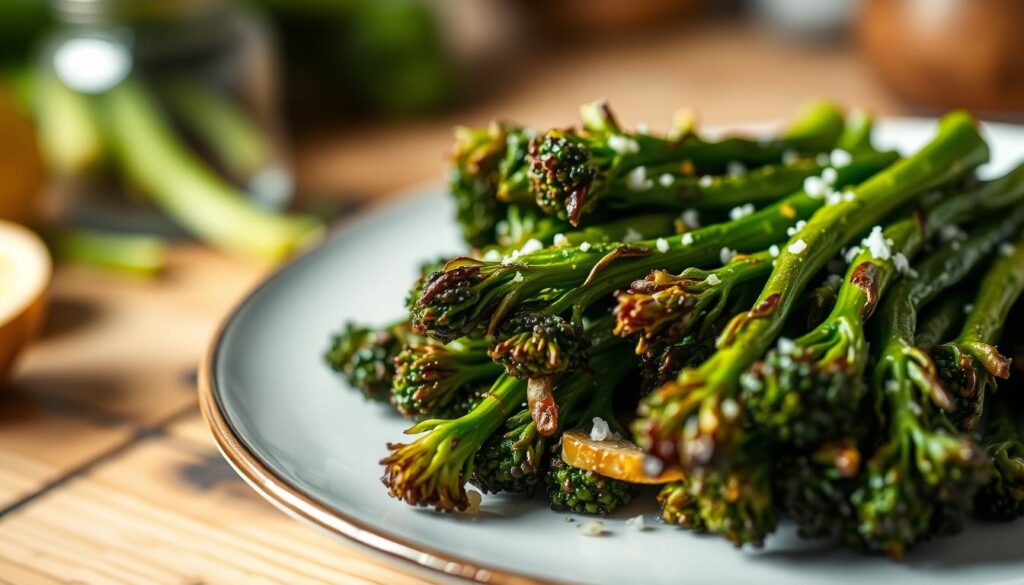
“The key to mastering oven roasted broccolini is respecting your oven’s heat and giving your vegetables plenty of personal space.”
When you learn how to cook broccolini at the right temperature, your vegetables transform into a dish worth serving at any meal. Start checking your broccolini around the 12-minute mark to prevent burning. Your oven may cook faster or slower than others, so timing varies.
Selecting the Best Bunches at the Market
Finding quality broccolini at your local grocery store or farmers market sets the stage for a delicious lemon broccolini dish. When you shop for this vegetable, you want to pick bunches that look fresh and vibrant. The right selection makes a real difference in how your final dish tastes and feels in your mouth.
Start by examining the florets closely. Look for bunches with tight, dark green florets that feel firm to the touch. The stems should be crisp and snap easily when you bend them. Avoid any bunches that look limp, wilted, or have yellowing leaves. These signs tell you the broccolini has been sitting for too long.
The best time to buy broccolini is early in your shopping trip. This way, you get the freshest options available. Quality produce at the start means better taste and texture when you cook it with lemon and garlic.
What to Look For When Shopping
Use this quick checklist when picking your bunches:
- Dark green color throughout the florets and stems
- Firm, crisp texture when you gently squeeze the bunch
- No yellowing, browning, or soft spots
- Stems that are thick and sturdy, not thin and bendy
- No slimy feel or odd smell
| Quality Indicator | Fresh Broccolini | Past Peak Freshness |
|---|---|---|
| Color | Bright, dark green | Yellow or brown patches |
| Texture | Firm and crisp | Limp and wilted |
| Stem Appearance | Sturdy and thick | Thin and bendable |
| Floret Condition | Tight and compact | Loose and separated |
Picking the highest quality broccolini bunches right from the start sets you up for success. You’ll end up with a side dish that tastes fresh, looks appealing, and has the perfect tender-crisp texture when prepared with lemon.
Enhancing Flavors with Fresh Aromatics
Simple vegetables transform into something special when you add the right aromatics. Fresh ingredients like garlic, herbs, and citrus can turn your lemon broccolini into a restaurant-quality dish. The key is learning how to balance these flavors so they work together beautifully without overpowering each other.
Garlic and Herb Infusions
Minced garlic brings warmth and depth to your dish. Start with two to three cloves of fresh garlic, minced finely, for every bunch of broccolini. Fresh herbs like parsley, thyme, or oregano add complexity and freshness. Red pepper flakes give you a subtle kick of heat that complements the vegetables nicely.
These aromatics work best when you add them early in your cooking process. This allows their flavors to blend with the oil and coat each piece of the broccolini evenly.
Zest and Juice Balance
Lemon zest is your secret ingredient for concentrated citrus flavor. The zest contains oils that deliver bright, fresh taste without adding extra liquid to your dish. Use a microplane to create fine zest from one fresh lemon.
Balance this with fresh lemon juice, but use it sparingly. Start with one tablespoon and adjust to your taste. The combination of zest and juice creates a layered lemon broccolini experience that feels sophisticated and complete.
- Begin with small amounts of each aromatic ingredient
- Taste as you go and adjust according to your preferences
- Use fresh ingredients rather than dried alternatives when possible
- Add delicate herbs at the end for maximum freshness
Serving Suggestions for Your Side Dish
Now that you know how to cook broccolini using various methods, you can serve this versatile vegetable at any meal. Lemon broccolini works beautifully alongside different main courses. The bright, fresh flavors complement nearly everything on your plate.
This elegant side dish pairs perfectly with grilled salmon, roasted chicken, or creamy pasta dishes. The light lemon taste doesn’t overpower delicate proteins like fish or seafood. For vegetarian meals, lemon broccolini shines next to risotto or grain bowls filled with quinoa and vegetables.
You can dress up your finished broccolini with simple toppings. These additions bring extra taste and texture to your plate:
- Shaved Parmesan cheese for a salty, nutty flavor
- Toasted pine nuts for crunch and richness
- Red pepper flakes for a spicy kick
- Crispy breadcrumbs for textured appeal
- Fresh herbs like parsley or chives for brightness
Consider your event when planning your menu. Casual family dinners need simple sides that taste great without fuss. Formal dinner parties benefit from carefully plated vegetables with elegant toppings. Lemon broccolini adapts easily to both settings.
The preparation method you choose affects how you serve the dish. Stovetop-cooked broccolini stays tender and bright green. Oven-roasted versions develop crispy edges that add interesting texture. Both styles impress your guests and satisfy your family.
Storing and Reheating Leftovers
After you finish enjoying your delicious meal, you might have leftover broccolini on your hands. Knowing how to store and reheat your vegetables properly helps you enjoy them again without losing their taste or texture. Fresh vegetables like broccolini can last several days in your refrigerator when stored the right way.
Proper Refrigeration
Store your oven roasted broccolini in an airtight container right after it cools down to room temperature. Place the container in your refrigerator where it will stay fresh for up to three days. Make sure your refrigerator stays at 40 degrees Fahrenheit or below to keep the vegetables safe to eat.
- Cool the broccolini completely before placing it in storage containers
- Use glass or plastic containers with tight-fitting lids
- Keep your refrigerator clean and organized
- Check your leftovers before eating them for any signs of spoilage
Maintaining Texture
When you are ready to eat your leftovers, avoid using the microwave. Instead, reheat your oven roasted broccolini in a toaster oven or regular oven set to 350 degrees Fahrenheit for about five to ten minutes. This method helps restore the crispy edges and keeps the stems tender without turning them soft and mushy.
| Reheating Method | Temperature | Time | Texture Result |
|---|---|---|---|
| Toaster Oven | 350°F | 5-10 minutes | Crispy and fresh |
| Conventional Oven | 350°F | 8-12 minutes | Evenly heated |
| Microwave | High | 2-3 minutes | Soft and wilted |
The microwave produces heat that softens the stems and fades the vibrant green color of your broccolini. Stick with oven reheating to get the best taste and appearance every time.
Conclusion
Learning how to make broccolini at home gives you the power to create a nutritious and tasty side dish whenever you want. Whether you pick the stovetop method for quick weeknight dinners or the oven approach for crispy, caramelized edges, you now have the skills to prepare this green vegetable with confidence. Your kitchen is ready for fresh, flavorful meals that come together with minimal effort.
The techniques you have learned open up many possibilities for your dinner table. You can switch between cooking methods based on what works best for your schedule and your kitchen tools. Fresh aromatics like garlic and bright lemon juice turn simple broccolini into something special that your family will enjoy eating.
Take these tips and make them your own in the kitchen. Try new flavor combinations and serving ideas that match your taste preferences. With the knowledge you now have, you can bring healthy and delicious broccolini dishes to your meals anytime you choose.
FAQ
What is broccolini and how does it differ from regular broccoli?
Broccolini, often called baby broccoli, is a hybrid vegetable created by crossing traditional broccoli with Chinese kale (gai lan). Unlike standard broccoli varieties, broccolini features long, slender stems and delicate florets with a much milder, sweeter flavor profile. This unique vegetable is also packed with essential vitamins like Vitamin C and Vitamin A, making it a nutritious addition to your balanced diet.
What ingredients do I need to make lemon broccolini?
To create lemon broccolini, you’ll need high-quality, firm bunches of fresh broccolini, extra virgin olive oil, kosher salt, freshly cracked black pepper, and fresh lemon juice or zest. Optional aromatics like minced garlic, red pepper flakes, and fresh herbs can enhance the flavor profile. Having these fundamental ingredients ready before you begin ensures a seamless cooking experience in your home kitchen.
How do I properly prepare broccolini before cooking?
Start by removing the woody ends from the bottom of each stem, as these are tough and unpleasant to eat. Wash the bunches thoroughly under cold running water to remove any grit or debris collected in the florets during the growing process. Once cleaned, pat the vegetables completely dry with a paper towel—this is crucial because dry broccolini will sear properly rather than steam in the pan during cooking.
What’s the best way to cook broccolini on the stovetop?
The stovetop method is an excellent way to achieve tender-crisp texture while maintaining the bright green color. Use a wide skillet with a small amount of water to steam the broccolini quickly before finishing it with a high-heat sauté. This technique is ideal for busy weeknights when you need to know how to cook broccolini in under ten minutes, and it allows you to control the final texture precisely.
How do I make oven roasted broccolini with crispy edges?
If you prefer a deeper, caramelized flavor, oven roasted broccolini is the superior choice. Set your oven to 400 degrees Fahrenheit to allow the florets to develop crispy, golden-brown edges while the stems remain tender. Spread the pieces in a single layer on the baking sheet to prevent them from steaming, and ensure they’re lightly coated with extra virgin olive oil and seasoning before roasting.
How do I select the best broccolini at the market?
When shopping at your local farmers market or grocery store, look for bunches with tight, dark green florets and firm, crisp stems. Avoid any bunches that appear limp or have yellowing leaves, as these indicators suggest the vegetable is past its peak freshness. Selecting the highest quality produce at the start of your shopping trip will significantly improve the final taste and texture of your finished dish.
What aromatics and flavors work best with lemon broccolini?
Aromatics like minced garlic, red pepper flakes, and fresh herbs can transform a simple side into a sophisticated culinary experience. Fresh lemon zest provides a concentrated burst of citrus oil that complements lemon broccolini perfectly without adding excess liquid. Balancing these flavors requires a light touch—start with small amounts and adjust according to your personal taste preferences to avoid overpowering the vegetable’s delicate nature.
How do I balance lemon juice to prevent the broccolini from becoming too acidic?
The secret to success when how to make broccolini lies in the timing of the lemon juice addition. Add lemon juice toward the end of cooking rather than at the beginning to prevent the vegetables from becoming overly acidic. Using lemon zest combined with a measured amount of fresh lemon juice allows you to achieve a balanced brightness that enhances the earthy notes of the vegetable without overwhelming your palate.
What are some serving suggestions for lemon broccolini?
This versatile side dish pairs beautifully with a wide variety of main courses, ranging from hearty pasta dishes to light, grilled seafood like salmon or roasted chicken. Because you now know how to cook broccolini using multiple methods, you can easily adapt the presentation to suit formal dinner parties or casual family gatherings. Consider topping the finished dish with shaved Parmesan cheese or toasted pine nuts to add a layer of richness and texture.
How should I store leftover broccolini?
If you have leftovers, store them in an airtight container in the refrigerator for up to three days to maintain the best quality. When reheating your oven roasted broccolini, use a toaster oven or conventional oven at 350 degrees Fahrenheit to help restore some of the original crispness. Avoid using the microwave if possible, as it tends to soften the stems and diminish the vibrant green color of the vegetable.
Can I use broccolini in different cooking methods besides stovetop and oven roasting?
Absolutely! While the stovetop and oven roasting methods are most popular for how to cook broccolini, you can also grill it for a smoky flavor or blanch it as a base for other preparations. The key is understanding the vegetable’s characteristics and adjusting your cooking time and temperature accordingly. Experiment with different aromatics and serving styles to discover your favorite way to prepare this versatile hybrid vegetable in your own kitchen.